Mesa Verde
Overview
Nestled in the rugged landscape of southwestern Colorado, Mesa Verde National Park offers a profound glimpse into the lives of the Ancestral Puebloans who inhabited this area for over 700 years. With its striking cliff dwellings and expansive views, the park invites visitors to explore a unique intersection of nature and history, making it a must-visit for those seeking a deeper understanding of Native American culture and the natural world.
Distinctive Highlights & Notable Features
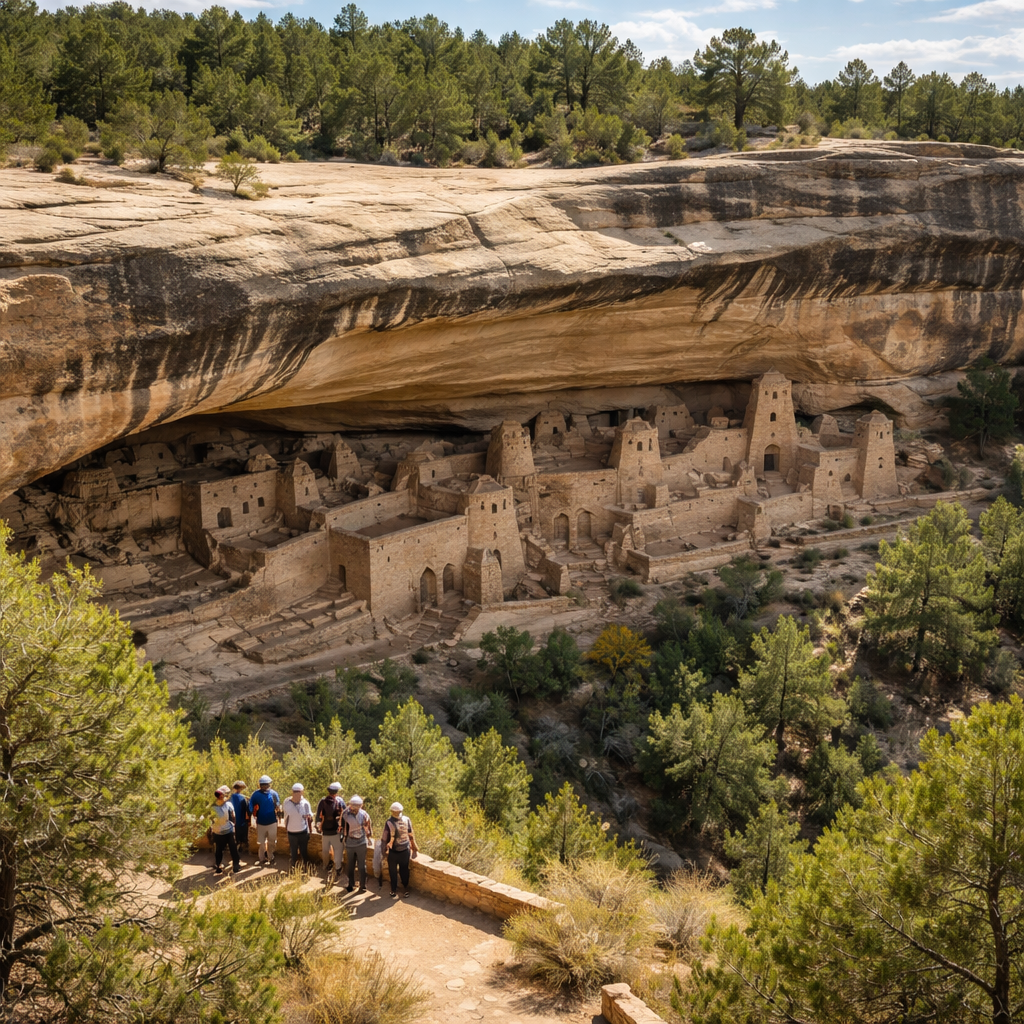
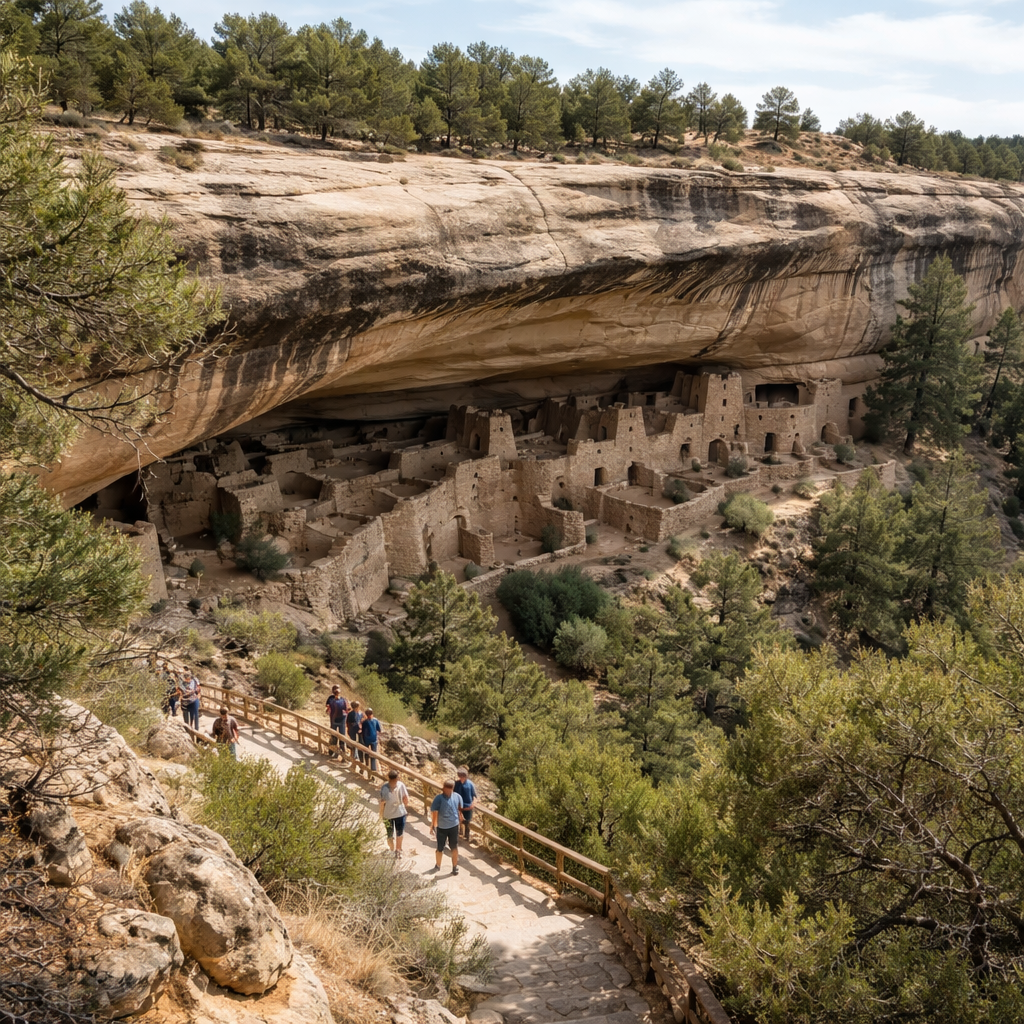
- Cliff Dwellings: The park is renowned for its well-preserved cliff dwellings, particularly Cliff Palace and Balcony House, showcasing the architectural ingenuity of the Ancestral Puebloans.
- Scenic Overlooks: Numerous viewpoints, such as the Montezuma Valley Overlook, provide breathtaking panoramas of the surrounding landscapes, ideal for photography and reflection.
- Archaeological Sites: Beyond the cliff dwellings, visitors can explore over 4,000 archaeological sites that reveal the rich history of the region.
What Makes Mesa Verde Noteworthy
This UNESCO World Heritage Site stands out not only for its archaeological significance but also for its commitment to preserving the cultural heritage of the Ancestral Puebloans. The park serves as a living testament to the resilience and adaptability of these early inhabitants, offering insights into their agricultural practices, social structures, and spiritual beliefs.
Visiting Hours / Accessibility Information
Mesa Verde National Park is open year-round, though some facilities and roads may be limited during winter months. The visitor center typically operates from 8 AM to 5 PM, and it is advisable to check for seasonal changes in hours. Accessibility varies by location, with some areas being more suitable for those with mobility challenges.
Practical Visitor Tips & On-Site Etiquette
- Stay on designated trails to protect the delicate ecosystem and archaeological sites.
- Respect the quiet of the park; keep noise to a minimum to enhance the experience for all visitors.
- Pack out what you pack in—leave no trace to preserve the natural beauty for future generations.
Typical Time Required for a Visit
A typical visit can range from a few hours to a full day, depending on your interests. For those keen on exploring multiple sites and participating in ranger-led programs, a full day is recommended to fully appreciate the depth of the park.
Restrictions or Prohibited Items
To maintain the integrity of the park, pets are not allowed on trails or in the backcountry. Additionally, collecting artifacts or disturbing archaeological sites is strictly prohibited.
Additional Context About Mesa Verde
Established in 1906, Mesa Verde National Park was created to protect the archaeological heritage of the Ancestral Puebloans. The park's name, which translates to "Green Table," reflects its unique topography and rich biodiversity. Over the centuries, the inhabitants adapted to their environment, developing advanced farming techniques and intricate social structures that continue to intrigue researchers and visitors alike.
Seasonal Considerations & Best Time to Visit
The best time to visit is during the spring and fall months when temperatures are mild, and the crowds are smaller. Summer can be quite busy, but it offers the full range of ranger-led programs and activities. Winter provides a serene experience, with fewer visitors and a different perspective on the landscape.
How Visitors Commonly Reach the Location
Most visitors arrive by car, as the park is accessible via U.S. Highway 160. The nearest major city is Durango, approximately an hour's drive away, which offers additional amenities and services.
Nearby Points of Interest
- Durango: A charming town with a rich history, known for its scenic train rides and vibrant arts scene.
- Four Corners Monument: The only point in the United States where four states meet, offering a unique photo opportunity.
- Hovenweep National Monument: Another archaeological site featuring ancient ruins, located just a short drive from Mesa Verde.
FAQs
- What are the entrance fees for Mesa Verde? Entrance fees vary; check the park's official website for the most current pricing.
- Are there guided tours available? Yes, ranger-led tours are offered during peak season, providing deeper insights into the park's history and significance.
- Can I camp in the park? Yes, there are campgrounds available, but reservations are recommended, especially during the busy season.
- Is photography allowed in the park? Yes, visitors are encouraged to take photos, but commercial photography requires a permit.
- What should I wear when visiting? Dress in layers and wear sturdy footwear, as trails can be rugged and temperatures can vary.