Fort De Soto Park
Fort De Soto Park: A Coastal Gem in St. Petersburg, Florida
Origins and Historical Background
Nestled at the southern tip of Pinellas County, Fort De Soto Park is steeped in history and natural beauty. Originally named after the Spanish explorer Hernando de Soto, the area became a strategic military site during the Spanish-American War in 1898. The remains of the fort, constructed to protect the Tampa Bay area, stand as a testament to the region's rich military history. Over the decades, the site transformed from a military post to a beloved public park, officially opening in 1963. Today, it serves as a sanctuary for both wildlife and visitors, blending historical significance with the allure of Florida's natural landscapes.
Geographic Setting and Environmental Character
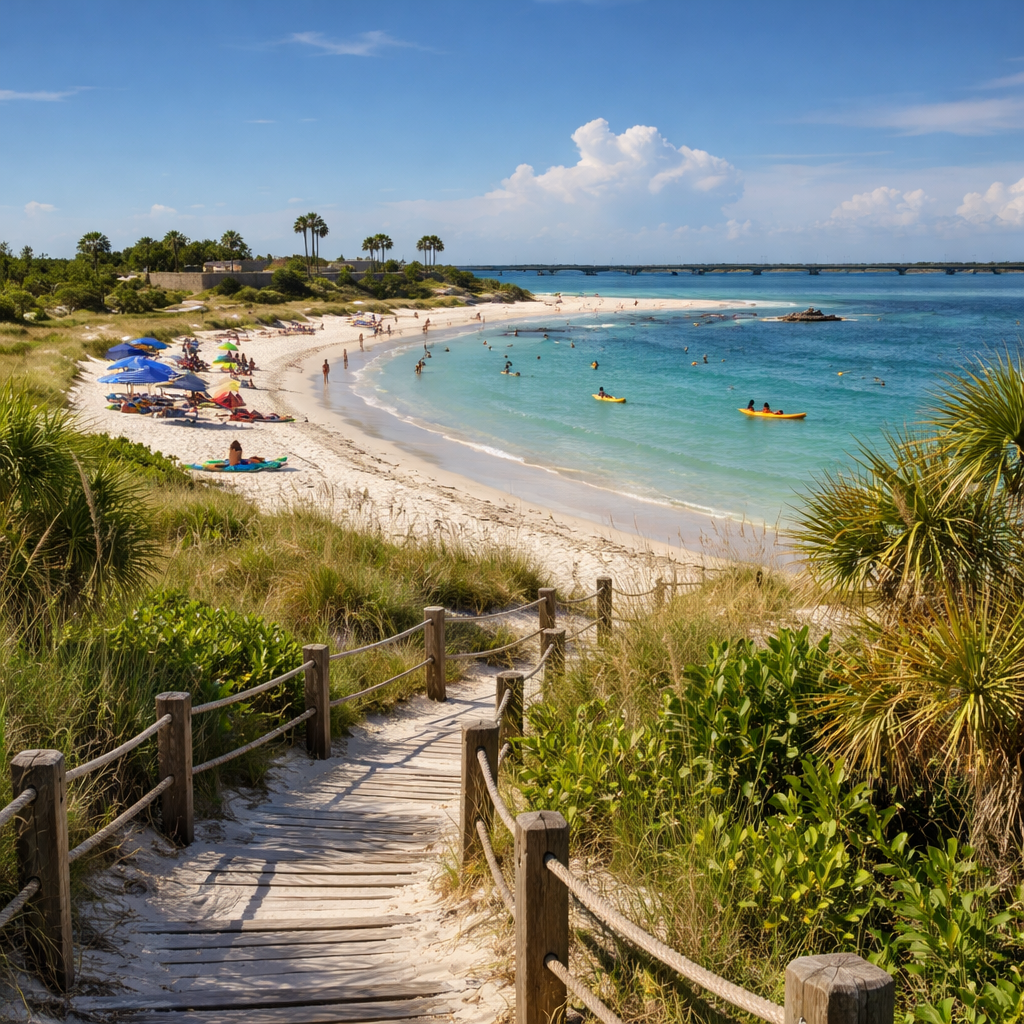
Covering more than 1,100 acres, the park is a mosaic of pristine beaches, mangroves, and lush pine forests. Located on five interconnected islands, Fort De Soto boasts stunning views of the Gulf of Mexico and Tampa Bay. The coastal environment is characterized by soft, white sandy beaches, which are perfect for sunbathing and swimming. The park's unique geography creates a diverse habitat for a variety of wildlife, including dolphins, manatees, and over 300 species of birds, making it a prime destination for nature enthusiasts and bird watchers alike.
Distinctive Features of Fort De Soto Park
What sets this park apart from others in the region is its commitment to preserving both its natural and historical elements. The fort itself, with its crumbling brick walls and historic cannons, invites visitors to explore the past while taking in sweeping views of the water. The park is also home to the largest campground in the Pinellas County area, offering a unique opportunity for visitors to immerse themselves in nature. With its combination of history, ecology, and recreational opportunities, Fort De Soto stands out as a multifaceted destination within the vibrant tapestry of Florida's Gulf Coast.
Experiences and Highlights
Visitors to the park can expect a variety of experiences that cater to different interests. For those seeking adventure, kayaking through the mangroves offers an up-close look at the area's diverse marine life. Biking along the park's scenic trails provides a leisurely way to explore the landscape, with options for both beginners and seasoned cyclists. The beaches are ideal for swimming, fishing, and picnicking, while the historic fort invites exploration and reflection.
- Beach Activities: The park features some of the most beautiful beaches in Florida, perfect for sunbathing, swimming, and collecting seashells.
- Wildlife Watching: Bring binoculars to spot dolphins in the bay or watch migratory birds in their natural habitats.
- Historical Exploration: The fort offers guided tours and informative displays that delve into its storied past.
- Camping: Spend a night under the stars at the campground, which includes amenities like restrooms and showers.
Cultural Significance
Fort De Soto Park is not just a recreational area; it is also a cultural hub that reflects the spirit of the local community. The park hosts various events throughout the year, including nature walks, educational programs, and festivals that celebrate local wildlife and history. This connection to the community fosters a sense of stewardship among residents, who take pride in preserving the park's natural beauty and historical integrity.
Seasonal Considerations and Best Time to Visit
While Fort De Soto Park is a year-round destination, the best time to visit is during the cooler months, from November to April. During this period, temperatures are mild, making outdoor activities more enjoyable. Spring is particularly vibrant, as wildflowers bloom and migratory birds return. Summer can be hot and humid, with afternoon thunderstorms, while fall offers a quieter experience as the crowds dissipate. Regardless of the season, visitors should always check the weather and plan accordingly, especially for activities like kayaking or biking.
Helpful Visitor Insights
When planning a visit, consider arriving early to secure parking, especially on weekends and holidays. The park is open from 7 a.m. to sunset, providing ample time to explore. Bring plenty of water, sunscreen, and insect repellent for a comfortable experience. If you're camping, reservations are recommended due to high demand. Lastly, don’t forget your camera—Fort De Soto Park is a photographer’s paradise, offering stunning landscapes and unforgettable sunsets.