Iowa State Capitol
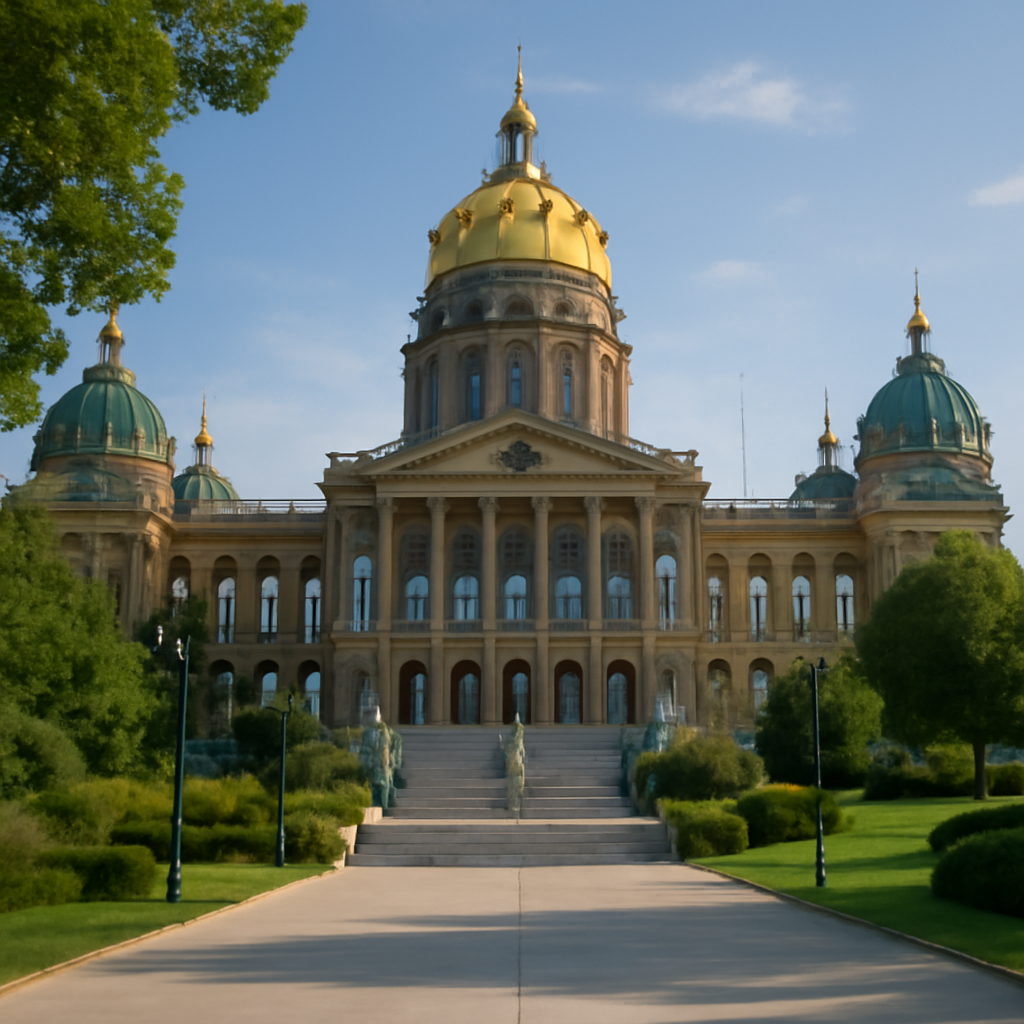
Iowa State Capitol: A Jewel in the Heart of Des Moines
As you approach the Iowa State Capitol, the golden dome glistens under the expansive Midwestern sky, a beacon of history and governance nestled in the vibrant city of Des Moines. This architectural marvel isn’t just the seat of Iowa’s government; it is a testament to the state’s rich heritage, a gathering place for civic engagement, and a stunning example of 19th-century craftsmanship.
Origins and Historical Background
The Capitol’s story began in 1871 when the Iowa legislature decided to construct a new building to replace the original, which had become inadequate for the state’s growing needs. Designed by architect John Francis Rague, the Capitol was completed in 1886, showcasing a blend of Renaissance and American architectural styles. The building’s crowning glory, its dome, is plated with 23-karat gold, symbolizing the prosperity and ambition of the state. Walking through its halls is like stepping back in time, where each room whispers tales of political debates, legislative milestones, and the evolution of Iowa’s identity.
Geographic Setting and Architectural Character
Situated on a hill overlooking the Des Moines River, the Capitol is surrounded by beautifully landscaped grounds that feature lush gardens, monuments, and pathways that invite exploration. The building itself is a striking example of the Second Empire style, characterized by its mansard roof and intricate details. As you enter, the grand staircase leads you to the rotunda, where sunlight pours through stained glass, illuminating the intricate murals that depict Iowa’s history. The building spans over 500,000 square feet and houses the offices of the Governor, Lieutenant Governor, and the Iowa General Assembly, making it not only a visual delight but also a functional hub of state governance.
Distinctive Features and Experiences
What sets this Capitol apart from others in the United States is not just its size or grandeur, but the accessibility it offers to visitors. Free guided tours are available, allowing you to delve deep into the history and functions of the building. Knowledgeable guides share fascinating anecdotes about the state's legislative processes, the significance of various artworks, and the stories behind the prominent figures who have walked its halls.
- The Dome: Climb the 365 steps to the top of the dome for a breathtaking panoramic view of Des Moines and beyond.
- Art and Sculpture: Admire the extensive collection of artwork, including portraits of Iowa governors and historical figures, as well as sculptures that celebrate the state’s agricultural roots.
- The House and Senate Chambers: Peek into the chambers where laws are debated and passed, witnessing the heart of Iowa’s democracy in action.
Cultural Significance
The Iowa State Capitol is more than just a government building; it embodies the spirit of Iowa. It serves as a venue for civic events, public gatherings, and celebrations that reflect the state's diverse culture. From annual festivals to educational programs, the Capitol is a focal point for community engagement. Each year, thousands of visitors, including school groups and history enthusiasts, walk through its doors, connecting with the past and present of Iowa’s governance.
Seasonal Considerations and Best Time to Visit
While the Capitol can be visited year-round, each season offers a unique perspective. Spring brings blooming flowers in the gardens, while summer allows for leisurely strolls on the grounds. Autumn paints the landscape in vibrant hues, making it an ideal backdrop for photographs. Winter, with its quiet charm, transforms the Capitol into a serene space, often adorned with festive decorations. For those looking to experience the building in full swing, visiting during the legislative session from January to April is recommended, as you can witness the dynamic energy of lawmaking firsthand.
Visitor Insights and Travel Considerations
When planning your visit, consider wearing comfortable shoes; the Capitol’s expansive grounds and interior spaces invite exploration. Free parking is available, but arriving early is advisable, especially during peak tourist seasons. Don’t forget to check the schedule for special events, such as public hearings or art exhibitions, which can enrich your experience. Lastly, take a moment to reflect in the quiet corners of the Capitol, where history and democracy converge, reminding us all of the importance of civic engagement.