Fenway Park
Fenway Park: The Heartbeat of Boston
A Historical Gem
Nestled in the Fenway-Kenmore neighborhood of Boston, Massachusetts, Fenway Park is not just a baseball stadium; it is a living monument to American sports culture. Opened in 1912, it is the oldest Major League Baseball stadium still in use, a testament to the enduring love of the game and the city’s rich history. The park was built during a time when baseball was gaining traction as America’s pastime, and its construction coincided with the burgeoning spirit of the early 20th century. Originally designed to house the Boston Red Sox, Fenway has hosted countless historic moments, from Ted Williams’ legendary batting to the heart-stopping 2004 World Series, which ended an 86-year championship drought for the team.
Geographic and Architectural Character
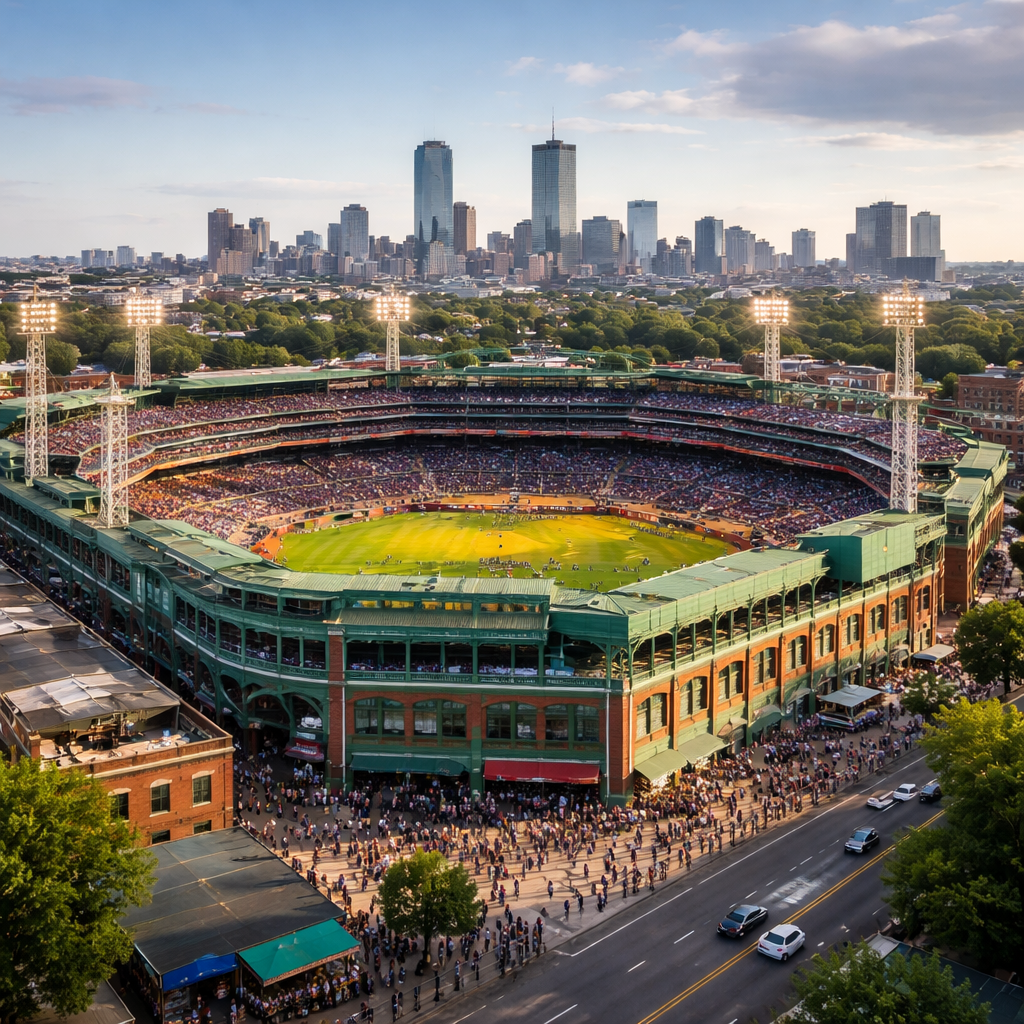
Fenway Park is situated in a vibrant urban landscape, surrounded by the hustle and bustle of Boston’s streets. The stadium’s distinctive green façade, highlighted by the iconic “Green Monster” left-field wall, stands out against the backdrop of the city’s skyline. The park’s intimate size—holding just over 37,000 fans—creates an atmosphere that feels electric, with the crowd’s energy palpable in every corner. Its asymmetrical dimensions and quirky features, such as the Pesky Pole and the steep bleacher seats, give it a charm that can’t be replicated in modern ballparks. The historic scoreboard, manually operated, adds a nostalgic touch that resonates with fans of all ages.
Distinctive Experiences
Visiting Fenway Park is akin to stepping back in time. As you approach the entrance, the scent of hot dogs and popcorn wafts through the air, mingling with the sound of cheers and the crack of a bat. The pre-game experience is a ritual in itself, with fans gathering around the park, engaging in spirited discussions about the team, and sharing stories of past games. Inside, the atmosphere is charged with anticipation as the crowd fills the stands, ready to cheer on their team.
- Guided Tours: For those seeking a deeper understanding of the park’s history, guided tours offer an insightful journey through its storied past. Visitors can explore the press box, the Green Monster, and the dugouts, gaining a behind-the-scenes perspective.
- Game Day: Attending a game is the quintessential Fenway experience. The thrill of watching a live baseball game, surrounded by passionate fans, is unmatched. Be sure to try the famous Fenway Frank and a cold beer while soaking in the atmosphere.
- Concerts and Events: Beyond baseball, the park hosts concerts and special events, showcasing its versatility as a venue. From rock legends to pop stars, the music reverberates through the historic walls, creating unforgettable memories.
Cultural Significance
Fenway Park is more than just a sports venue; it is a cultural touchstone for Boston and beyond. The park has witnessed significant social changes, including the integration of baseball when Jackie Robinson played against the Red Sox in 1945. It has become a gathering place for generations of families, friends, and fans, fostering a sense of community and tradition. The park’s legacy is intertwined with the identity of Boston itself, symbolizing resilience and pride.
Seasonal Considerations
While the baseball season runs from April to October, each season offers a different charm. Spring games are filled with the promise of a new season, while summer nights at the ballpark create a magical atmosphere under the stars. Fall brings a sense of nostalgia as the leaves change, and the excitement of playoff baseball can electrify the air. Winter, although quiet, allows for special events and tours, providing a unique perspective on the park’s architecture and history. For the best experience, aim to visit during the summer months when the park is alive with games and activities.
Visitor Insights
When planning a visit, consider arriving early to soak in the atmosphere and explore the surrounding neighborhood. The Fenway area is rich in dining options, from classic pubs to trendy eateries, making it easy to grab a meal before or after the game. Public transportation is recommended, as parking can be limited and costly. Dress in layers, as Boston weather can be unpredictable, and be prepared for the excitement of a packed stadium, where standing and cheering is part of the experience.
Fenway Park is not merely a destination; it is an experience that captures the essence of Boston’s spirit. Whether you are a die-hard baseball fan or a casual visitor, the park offers a unique glimpse into the heart of a city that cherishes its history, community, and love for the game.