Patriots Point Naval & Maritime Museum
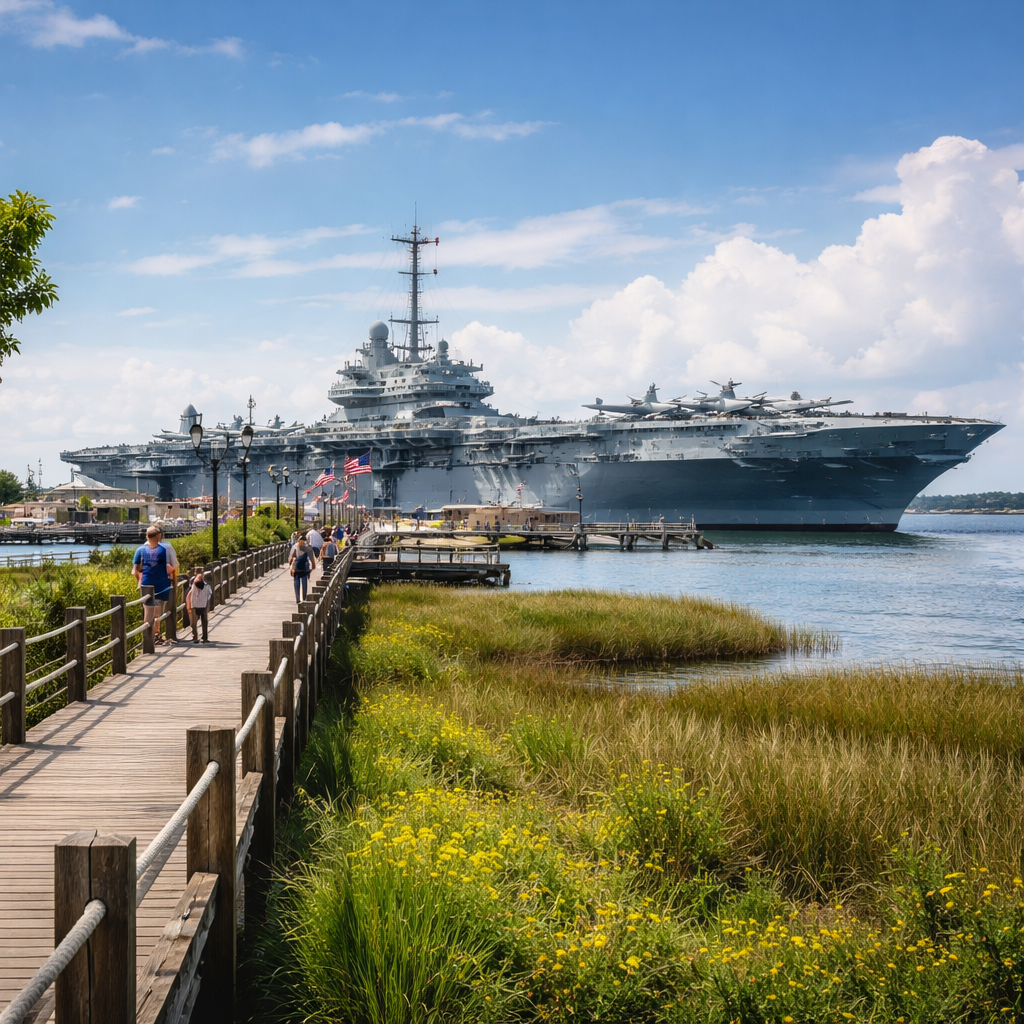
Patriots Point Naval & Maritime Museum
Origins and Historical Background
Nestled on the banks of the Cooper River in Mount Pleasant, South Carolina, this museum is a living tribute to the United States Navy and its storied past. The site itself has a rich history, originally serving as a naval yard during World War II. The museum was established in 1975, drawing on the legacy of the USS Yorktown, an aircraft carrier that played a significant role in both World War II and the Vietnam War. The Yorktown, now a centerpiece of the museum, is a testament to the courage and resilience of the sailors who served aboard her.
Geographic Setting and Architectural Character
Patriots Point is strategically located just across the harbor from historic Charleston, making it a significant landmark in the region. The expansive grounds offer stunning views of the Charleston skyline, with the majestic Ravenel Bridge in the background. The museum's architecture is a mix of historic naval vessels and modern exhibition spaces, creating a unique environment where visitors can explore naval history while enjoying the scenic beauty of the Lowcountry. The area is characterized by its rich maritime heritage, with the salty breeze and the sounds of seagulls adding to the immersive experience.
Distinct Features of the Museum
What sets this museum apart is its hands-on approach to history. Visitors can board the USS Yorktown and explore its decks, from the flight control room to the hangar bay, where aircraft are displayed as if they are ready for launch. The museum also features a variety of other vessels, including the USS Laffey, a destroyer known as the "Ship that Would Not Die," and the USS Clamagore, a Cold War-era submarine. Each ship tells its own story, providing a glimpse into the lives of those who served aboard them.
Experiences and Highlights
- Interactive Exhibits: The museum boasts numerous interactive displays that engage visitors of all ages. From flight simulators to immersive multimedia presentations, each exhibit is designed to educate while entertaining.
- Educational Programs: The museum offers a range of educational programs for school groups, families, and history enthusiasts. These programs often include guided tours and hands-on activities that bring history to life.
- Special Events: Throughout the year, the museum hosts various events, including military reenactments, guest lectures, and ceremonies that honor veterans, allowing visitors to connect with history on a deeper level.
Cultural and Regional Significance
The museum serves as a vital part of the community, preserving the memory of those who have served in the military while fostering a sense of pride among locals and visitors alike. It stands as a reminder of the sacrifices made by generations of sailors and their families. Additionally, its proximity to Charleston enhances its cultural significance; the city itself is steeped in history and offers a rich tapestry of Southern culture, making the museum a perfect complement to a broader exploration of the region.
Seasonal Considerations and Best Time to Visit
While the museum is open year-round, the best time to visit is during the spring and fall months when the weather is mild, and outdoor activities are more enjoyable. The summer can be quite hot and humid, which may deter some visitors from fully enjoying the outdoor exhibits and ships. Additionally, visiting during the off-peak months can help avoid crowds, allowing for a more intimate experience with the exhibits and vessels.
Visitor Insights and Travel Considerations
When planning your visit, it’s advisable to allocate at least half a day to explore the museum fully. Comfortable walking shoes are a must, as the grounds are expansive, and there’s much to see. Consider taking a guided tour to gain deeper insights into the history and significance of the vessels. Lastly, check the museum's calendar for special events or programs that might align with your visit for a richer experience.